What Do Fresh-Start, Trainer, Participant, and Standalone Machines Mean?
DaDesktop is an advanced training platform that provides accessible cloud machines for training courses and admin tools to easily oversee the desktop environments throughout each course in China.
To make this possible, DaDesktop uses several distinct desktop machine types that work together to support those courses.
Here’s an explanation of the different machine types and how they are used.
Fresh-Start Machine
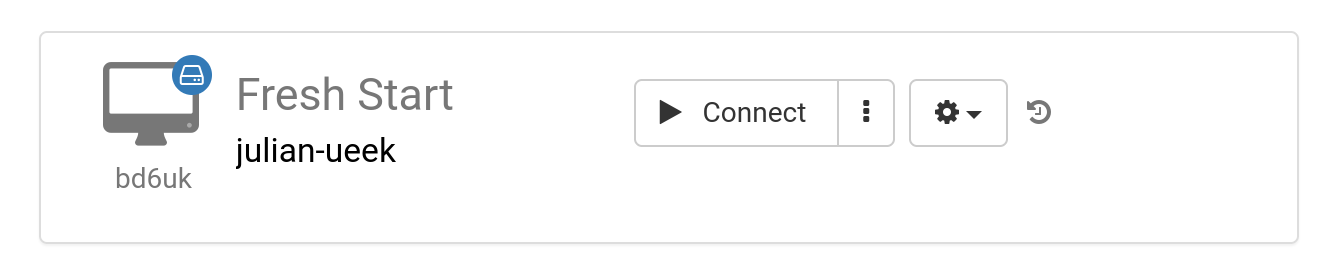
A 'Fresh-Start' is the DaDesktop machine where the Trainer builds and refines the course content. Once finalized, that Fresh-Start machine is copied to all Participant desktops so everyone starts from the same point. You can think of it like a 'Golden Image' that can be rolled back if issues arise on either the Trainer’s or Participants’ machines.
Trainer Machine
A 'Trainer' machine is what the Trainer uses to present the course material to Participants during the session. This machine’s state will naturally evolve from the Fresh-Start as the Trainer installs, configures, and runs the necessary software applications and libraries related to the course subject.
If a course has more than one Trainer, there will be multiple Trainer machines available.

Participant Machine
A 'Participant' machine is the one each learner uses during the course. With the Trainer’s guidance, they can install software, adjust settings, and carry out exercises on their own desktop.

Normally, Fresh-Start, Trainer, and Participant machines are automatically removed a short time after the course ends. That’s why there’s one more machine type available, one that isn’t tied to a course and can be kept for as long as you need—known as a 'Standalone'.
Standalone Machine
A 'Standalone' machine is not necessarily used during the course itself. It 'stands alone' as a separate environment that can be accessed before or after the course, or entirely on its own with no course connection at all. This flexibility makes the Standalone machine particularly useful.

Common scenarios for creating Standalone desktops include:
- Building training course materials that can be reused repeatedly outside a course or kept handy for whenever they’re needed.
- Having a flexible machine with a different operating system (Linux, Windows) to safely test ideas in a contained environment.